Therapy or Data Trap? A Strategic Audit of 2026’s Top Mental Health Apps (BetterHelp vs. Talkspace vs. AI)

The Subscription Architecture: When Care Becomes MRR
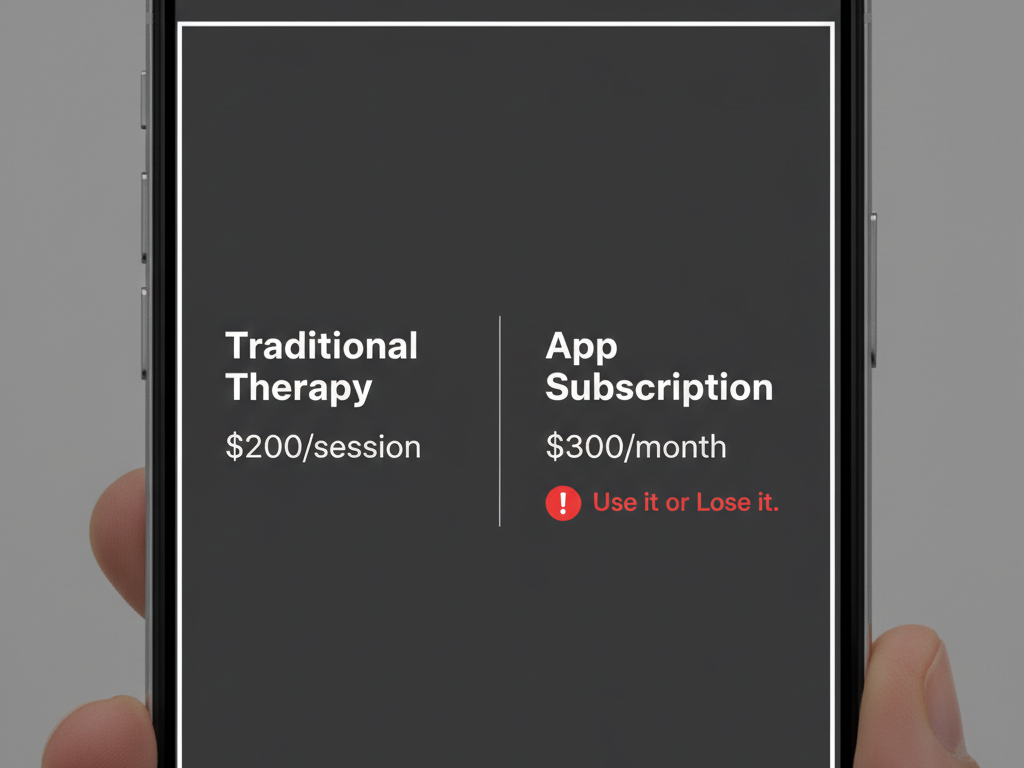
Traditional psychotherapy operates on a fee-for-service model: you exchange currency for clinical time. Telehealth platforms have migrated to a fundamentally different revenue structure: Monthly Recurring Revenue (MRR).
This architectural shift realigns the incentive mechanism. Under the legacy model, the clinician’s income scales with session frequency—they benefit when you engage. Under the subscription model, the platform achieves maximum margin when you maintain your $300/month payment but consume minimal resources. This is the “gym membership arbitrage” applied to mental health infrastructure.
Does this constitute fraud? No. But it does mean you must approach consumption strategically. High-utilization users—those who engage in daily messaging and weekly sessions—extract positive value. Low-engagement subscribers are effectively subsidizing the platform’s unit economics.
I’ve conducted a forensic analysis of the Terms of Service and pricing architectures across major 2026 platforms. What follows is the strategic audit.
Market Leaders: BetterHelp vs. Talkspace
These two entities dominate market share. Their service offerings appear functionally identical at surface level, but the unit economics diverge significantly.
As of February 2026, coinciding with updated HIPAA compliance standards and REAL ID verification requirements, both platforms have modified their identity verification protocols and data handling processes. This has introduced marginal friction to onboarding but increased regulatory defensibility.
🥊 The Comparative Economics
- BetterHelp:
Business Model: Volume-based. Weekly live sessions typically included in base subscription.
Structural Risk: Dynamic pricing algorithm. Your rate varies based on geographic demand curves. A Manhattan subscriber pays a premium over a Cleveland subscriber for identical service delivery.
- Talkspace:
Business Model: Insurance integration. Higher probability of in-network coverage.
Structural Risk: Base tier frequently excludes live video sessions. You’re paying $250+ for asynchronous text communication. (Text-based venting is not clinically equivalent to synchronous therapy.)
Strategic Assessment: For cash-pay users, BetterHelp delivers superior cost-per-minute economics due to bundled live sessions. For insured users, Talkspace represents the optimal pathway due to direct claims processing and reimbursement infrastructure.
The Synthetic Intelligence Variable: Human vs. Algorithmic Intervention
In 2026, we cannot ignore the computational element in the therapeutic landscape: AI-powered mental health platforms.
Applications like Woebot or GPT-6-based counseling interfaces offer subscriptions starting at $15/month. Is this a viable substitution?
The empirical reality: AI demonstrates high efficacy for Cognitive Behavioral Therapy (CBT) protocols—pattern recognition, cognitive reframing, behavioral tracking. It functions as a tool, analogous to a toothbrush. But it cannot perform surgery.
For managing subclinical anxiety or establishing habit architecture, the AI arbitrage is substantial (saving $285/month versus human-delivered platforms). For trauma processing or complex relational dynamics, AI remains clinically insufficient.
If you’re uncertain whether algorithmic or human intervention suits your needs better, consider using AI-based mental health assessment tools for preliminary triage. (I’ll be analyzing the top 3 evidence-based Mental Health Assessment Platforms for 2026 in my next breakdown.)
The Provider Retention Problem (And Why Your Outcome Depends On It)
I’ve analyzed clinician discussions across r/therapists over multiple quarters. The consensus is structurally concerning. Many platforms compensate providers at fractions of market rate—sometimes $20-$30/hour for licensed professionals.
Why should you concern yourself with provider compensation?
Because quality correlates with retention, and retention correlates with compensation. Experienced, highly-credentialed clinicians exhibit high attrition rates on these platforms. Provider churn is elevated. You may establish therapeutic rapport with a practitioner, only to have them exit the platform within 30-60 days. This creates what I term “clinical discontinuity”—a material risk to treatment efficacy.
Strategic Selection Protocol
Before authorizing payment information, execute this decision framework:
- Insurance Coverage Audit: Access your insurer’s provider portal first. Many now maintain partnerships with MDLive or Doctor On Demand with $0 copay structures. Do not allocate $300 to BetterHelp if your insurance provides MDLive at zero marginal cost.
- Define Therapeutic Scope: Do you require pharmacological intervention? Most therapy-focused platforms cannot prescribe Schedule II controlled substances (e.g., stimulants, benzodiazepines) due to DEA regulations. Medication management requires psychiatry-specific platforms like Cerebral or Hims/Hers.
- The 14-Day Utilization Test: Most platforms don’t offer trial periods, but maintain satisfaction-based refund policies. Engage the service intensively during the initial 14 days. If the provider matching is suboptimal, request immediate reassignment or invoke the refund mechanism. Passive acceptance is strategically disadvantageous.
Optimize your mind, but protect your wallet. — Alex
⚠️ Operational Disclaimer
I function as a strategic navigator, not a licensed mental health professional. This analysis is derived from pricing model examination, terms of service forensics, and user data patterns as of February 2026.
If you are experiencing acute crisis or suicidal ideation, digital platforms are NOT appropriate interventions. Contact 988 (US National Suicide Prevention Lifeline) or proceed to the nearest emergency department immediately.
Telehealth platforms are designed for non-emergency care delivery. References to specific brands (BetterHelp, Talkspace, etc.) do not constitute formal endorsement, and business models remain subject to change. Always verify insurance coverage parameters directly with the issuing carrier.