The Quantified Self: Turning Your Apple Watch from a Gadget into a Clinical Diagnostic Tool
The Obsolescence of the Annual Physical
The traditional medical model operates on a fundamental statistical error: the “Snapshot Fallacy.” You visit a physician once annually. They measure your blood pressure for 30 seconds. They auscultate your heart for 15 seconds. Based on this microscopic sample size, they extrapolate macroscopic conclusions about your physiological state.
This is sampling bias at scale.
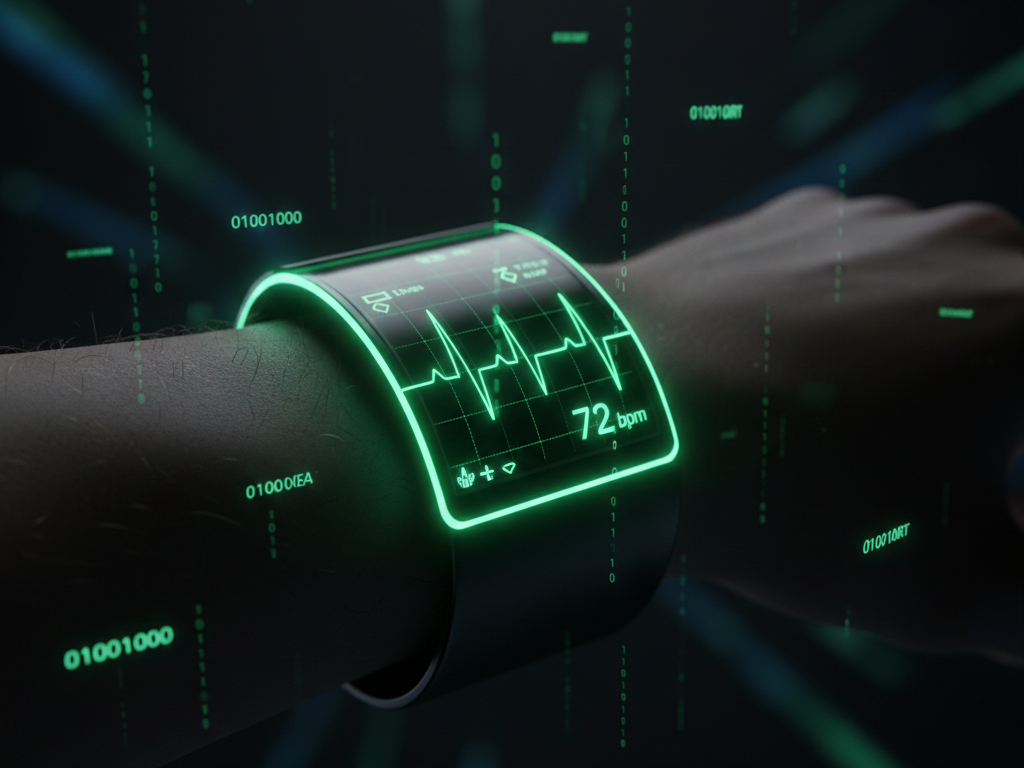
In 2026, the paradigm has shifted toward “Continuous Vitals Monitoring.” Devices like the Apple Watch or Oura Ring are no longer consumer pedometers—they’re FDA-cleared diagnostic peripherals. They capture the longitudinal film of your health, not a single static frame.
The strategic objective is transitioning from passive patient to Data-Driven Health Strategist. What follows is the protocol for deploying wearable telemetry in clinical contexts.
Strategic Metric 1: AFib Burden (Forensic Cardiology)
Many cardiovascular events are “paroxysmal”—they manifest intermittently and resolve spontaneously. You experience palpitations at home, but when you’re connected to the clinic’s Holter monitor, your cardiac rhythm appears normal. This is the “White Coat Effect” inverted.
As of February 2026, following updated FDA guidance on consumer ECG devices and REAL ID integration with health records systems, wearable-generated cardiac data now carries increased evidentiary weight in clinical documentation.
The Execution Protocol: Enable “Irregular Rhythm Notifications” and “AFib History” tracking.
When your device flags an anomaly, avoid subjective reporting (“I felt unusual”). Instead, export the PDF-format ECG waveform directly from the Health application. Presenting a raw ECG strip converts your subjective symptom into objective clinical evidence. You’re providing diagnostic signal, not anecdotal noise.
Strategic Metric 2: Sleep Architecture as Recovery Intelligence
Sleep is not a binary state (asleep/awake). It represents a complex architecture of REM, Deep, and Light stage cycling. 2026 wearable algorithms have achieved near-clinical correlation in sleep stage classification accuracy.
The Strategic Insight: Acute reduction in “Deep Sleep” percentage or elevation in “Resting Heart Rate” (RHR) frequently functions as a leading indicator of infection or metabolic stress 48-72 hours before symptomatic presentation.
Navigator Protocol: I utilize RHR variance as a physiological “check engine light.” If my baseline RHR elevates from 55 to 65 overnight without exogenous cause, I initiate immune support protocols immediately. I respond to the data signal, not the subjective sensation.
Strategic Metric 3: The Data-Augmented Clinical Consultation
Physicians operate under severe time constraints. They lack bandwidth to review unstructured wearable data during brief consultations. You must curate the signal.
Do not present a year’s worth of raw CSV exports. That’s noise pollution. Instead, extract the “Trend Vector.”
“My average Resting Heart Rate has increased 15% over the past three months, temporally correlated with the initiation of [medication name].”
This phrasing compels clinical evaluation. You’re communicating in their analytical framework—trends, percentage changes, temporal correlations. You shift the dynamic from “Expert vs. Layperson” to “Collaborative Data Analysis.”
If synthesizing longitudinal health metrics and identifying meaningful trends feels complex, consider using health data visualization tools that automate pattern detection. (I’ll be evaluating the top 3 Wearable Health Analytics Platforms for 2026 in my next breakdown.)
The Privacy Vector: Biological Data Sovereignty
As we integrate technology into physiological monitoring, data sovereignty becomes critical. Audit your “Health Data Sharing” permissions quarterly. Grant granular data access to your clinical provider, but restrict algorithmic access from third-party advertising networks and insurance underwriters.
Your biological telemetry is your most proprietary asset. Treat it accordingly.
Data is the new vital sign. — Alex
⚠️ Operational Disclaimer
I function as a strategic navigator analyzing health technology architectures—not as a licensed physician. The devices referenced (Apple Watch, Oura Ring) are consumer wellness platforms. While certain features maintain FDA clearance for specific detection capabilities (e.g., atrial fibrillation), they are not substitutes for professional medical diagnosis.
Clinical Imperative: Never interpret raw biometric data (ECG, SpO2, HRV) in isolation. A “normal” reading does not guarantee physiological health, and an “abnormal” reading requires clinical verification. If you experience chest pain, dyspnea, or neurological symptoms, disregard device readings and contact emergency services (911) immediately. Wearable data augments clinical care—it does not replace it.