
The “Insurance Snitch”: Avoiding the $400 Surprise & Privacy Traps
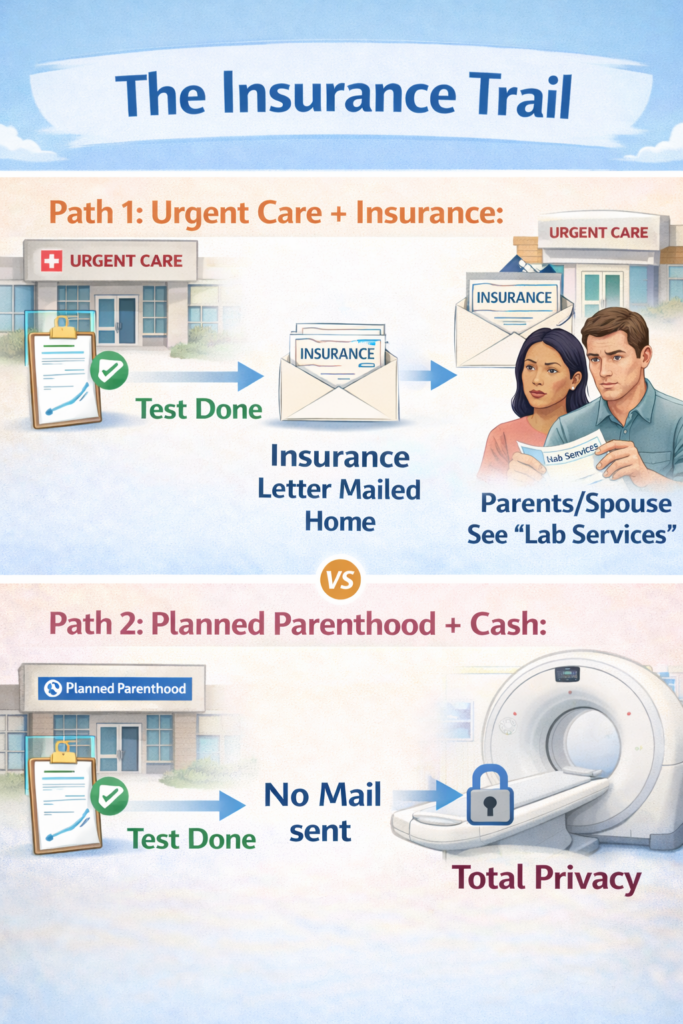
In the U.S. healthcare system, being responsible about your health can sometimes lead to an unintended “outing.” A few weeks after a routine screening, an envelope arrives from the insurance company—the Explanation of Benefits (EOB)—detailing “Lab Services: Venereal Disease Screen.” If you are a dependent on a parent’s or spouse’s plan, this is a major administrative privacy breach.
Choosing between Urgent Care and Planned Parenthood isn’t just about healthcare; it’s about Privacy Arbitrage. Making the wrong choice can cost you $400 in surprise lab fees or, worse, your confidentiality. As a Care Navigator, I’ll show you how to manage the billing trail.
Administrative Tiering: Budget vs. Privacy
The facility you choose determines the Information Trail. Use this administrative matrix to decide which billing path fits your current situation.
✅ Tier 1: Planned Parenthood
Best for Income-Based Billing & Maximum Privacy:
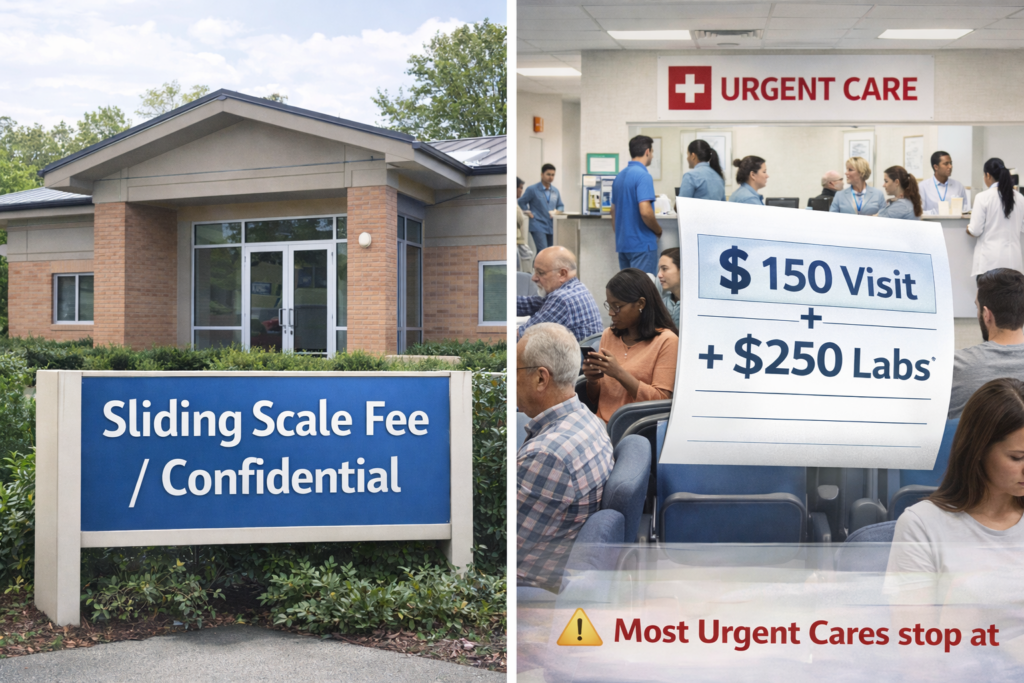
- Sliding Scale Fees: Costs are adjusted based on your income (often $0 – $150).
- Cash-Only Option: They are experts at “off-the-books” billing for patients who wish to bypass insurance EOBs.
- Self-Contained Labs: Many locations handle labs internally, reducing third-party billing risks.
⚠️ Tier 2: Urgent Care Centers
Best for Immediate Access (Fee-for-Service):
- Higher Billing Overhead: Expect a “Level 3” office visit fee plus lab markups.
- Third-Party Risk: Labs are often sent to Quest or LabCorp, generating a second bill and a second EOB.
- Policyholder Access: If you use insurance, the primary policyholder will likely see the transaction details.
Cost Reality Check: The Sticker Price of Discretion
When you don’t want a paper trail, you pay the “Self-Pay” rate. Here is the market clearing price for routine screenings in 2026.
💰 2026 Price Estimates (Cash/Self-Pay)
-
🏥 Urgent Care: $250 – $500
Includes $150+ Office Visit + $100-$300 for Third-party Labs (Quest/LabCorp). -
💙 Planned Parenthood: $0 – $180
Variable based on income verification. Often free for students. -
💻 At-Home Digital Kits: $100 – $160
Highest privacy (no physical office visit), but requires self-collection.
Forensic Billing: Decoding the “Screening” Codes
When reviewing your bill (or disputing one), watch for these common CPT codes. If you see high-complexity codes for a simple screen, you may be a victim of Upcoding:
- CPT 87491: Chlamydia trachomatis detection.
- CPT 87591: Neisseria gonorrhoeae detection.
- CPT 86703: HIV-1 and HIV-2, single result.
Navigator Alex Tip: The “Digital EOB” Hack
If you must use insurance but need privacy, call your insurance carrier before the visit. Request to “Suppress Paper EOBs” and switch to “Electronic Only.” Under HIPAA’s Right to Confidential Communications, you can also request that they send communications to a different address or via a specific phone number. They are legally required to accommodate reasonable requests for privacy if you state that disclosure could endanger you.
Administrative Disclaimer
This article is for educational and administrative optimization purposes only. I am a Healthcare Navigator specializing in billing and privacy frameworks, not a licensed medical professional. Testing for infectious diseases is critical for long-term health; clinical necessity should always take precedence over financial or privacy concerns.